




7 Tips for Fresh Flower Bridal Bouquets Online
Explore practical guidance for 7 Tips for Fresh Flower Bridal Bouquets Online including common pitfalls to avoid with The Flower Boutique by your side.

A wedding bouquet sits in a cool Perth kitchen sink, half out of its paper, while you snip the stems and fill the vase before the afternoon heat turns the room against you. The ribbon can wait. The photos can wait. Water comes first.
If you’ve ever searched for how to keep flower bouquets fresh after watching a beautiful bunch go limp by lunch, you’re not alone. I’ve had roses look tired at 10 a.m. and then stand up straight by dinner once they were properly recut and rehydrated. Most bouquets don’t need secret tricks. They need quick handling, clean water, and a bit of common sense.
That matters even more in Perth, where a warm bench, a sunny window, or a delayed unpacking job can shave days off a bouquet meant for a wedding, funeral, celebration, or heartfelt gift. Let’s walk through the steps that actually help.
To help you better understand how to keep flower bouquets fresh, we've included this informative video from Floral Supplies. It provides valuable insights and visual demonstrations that complement the written content.
If the bouquet is tied to an event, timing is everything. For wedding flowers especially, it helps to plan delivery with enough time for the blooms to rehydrate and be ready for the big day. That little buffer makes a real difference. Flowers that have traveled often arrive thirsty, not ruined.
For gifts or home display, same-day arrival is fine. For wedding work, though, I’d always rather have flowers a touch early than stress over them on the morning of. A bouquet that looks a little droopy on arrival can often perk back up beautifully after a few hours in water.
If the bouquet is for an event, allow enough time for it to rehydrate before the day matters.
You need a few clean basics, ready before you open the wrapping.
| Tool | Why It Helps | What to Remember |
|---|---|---|
| Clean vase or bucket | Reduces grime and bacteria | Wash it before the flowers go in |
| Sharp scissors or knife | Makes a clean cut instead of crushing stems | Dull blades shorten vase life |
| Room-temperature water | Helps flowers start drinking straight away | Fill the container before you finish unpacking |
| Flower food | Can improve how long cut flowers last | Use the packet as directed, don’t save half |
| Clean sink or bench space | Keeps the setup calm and tidy | Especially useful when handling large bouquets |
One more thing: make daily water checks part of the plan from the start. It sounds boring because it is boring. It also works.
A fresh bouquet doesn’t always look “photo ready” the second it lands on your bench. Some flowers arrive tight and still opening. Others look a bit sleepy because they’re dehydrated from traveling. That’s normal. Don’t confuse thirsty with finished.
What you’re really checking for is structural health. Are the stems firm? Are the blooms intact? Is there obvious mush, bad smell, or broken growth? A few bent outer petals on roses or slightly limp heads after transport don’t worry me much. A dirty vase and dry stems worry me a lot more.
The clock starts the moment the bouquet arrives. Get the flowers out of paper, plastic, and transit ties right away. Wrapping is helpful on the road; it’s not helpful once the bouquet is in your home. It traps heat, restricts air flow, and keeps you from dealing with the stems properly.
If the bunch is hand-tied for presentation, you can keep the main shape intact while still removing the outer layers. Just don’t leave the stems bundled for hours because you got busy answering the door, taking photos, or clearing a spot on the table.
Once the bouquet is free, give it a quick once-over. Look for snapped stems, squashed blooms, or leaves turning slimy near the base. Remove anything that is clearly damaged beyond saving. On a mixed bouquet, it’s common for one or two stems to take the hit during transport.
Don’t overreact to a bit of droop in the first 30 minutes. I’ve seen hydrangeas and roses look miserable after delivery and recover once they’ve had water and a clean cut. Your job in this first hour is triage, not styling.
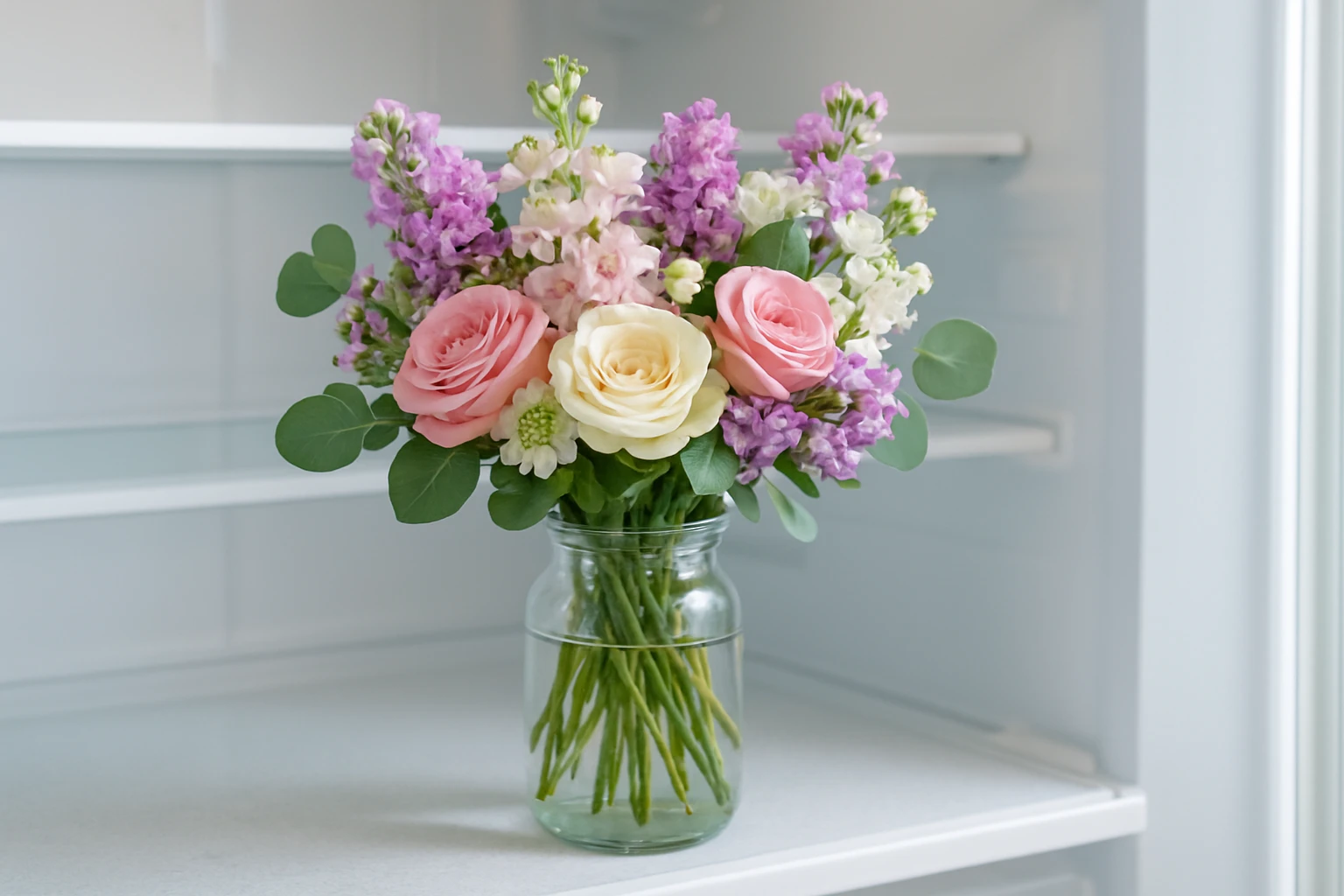
Fresh flowers should go into a clean container filled with fresh, room-temperature water as soon as possible. Add flower food now, not later. This is the recovery window. If the bouquet has traveled across Perth in a van or sat outside for even 20 minutes, rehydration is the priority.
And yes, this comes before choosing the pretty vase. If the decorative vase is still dusty in the cupboard, use a clean jug or bucket first. Fancy can happen after the flowers have had a drink.
The first hour after delivery matters more than the ribbon or wrapping.
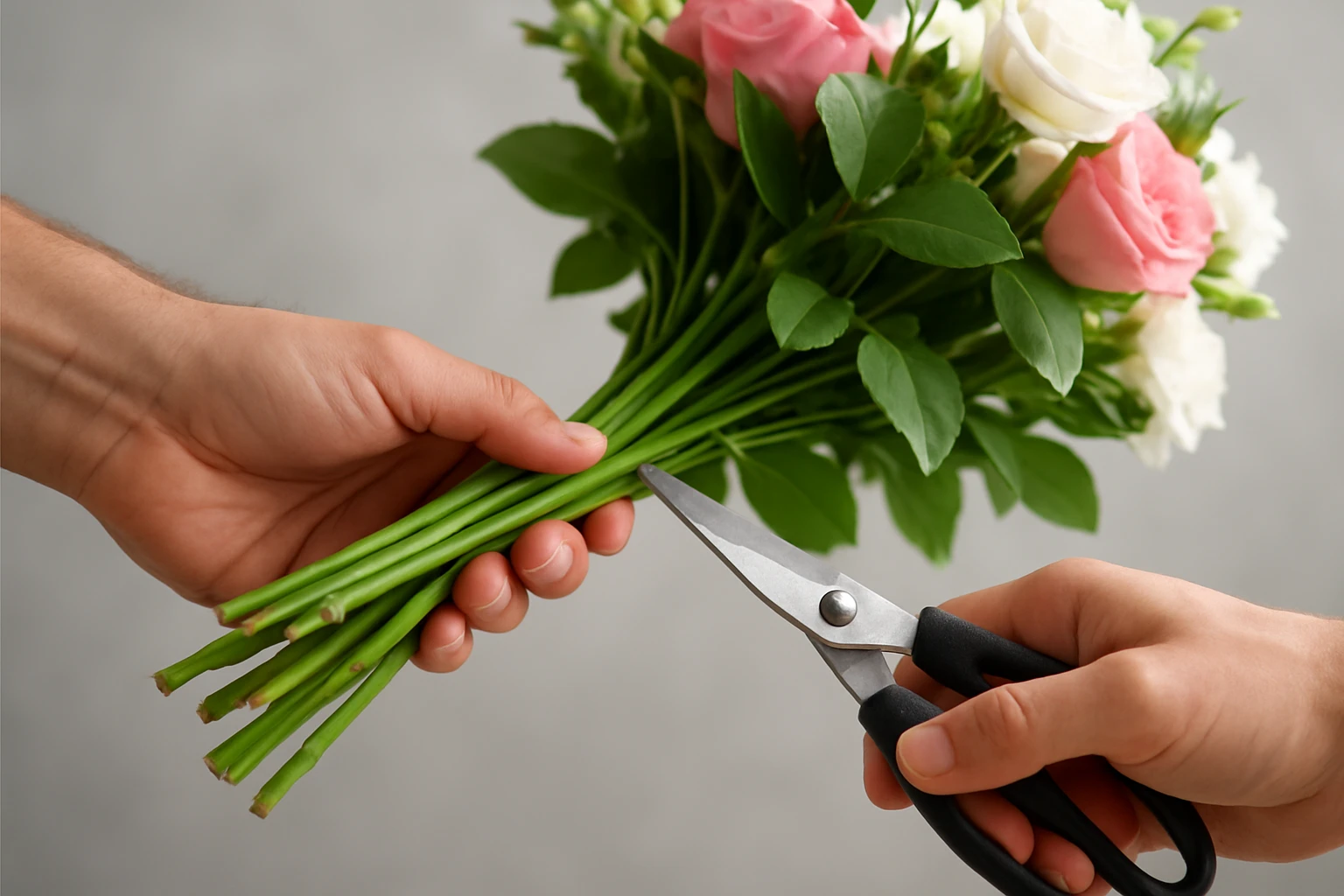
This step is small, and it changes everything. Use sharp, clean scissors or a knife. Clean cuts help stems take up water more efficiently. Dull blades crush the stem ends, which is about as helpful as pinching a straw flat before trying to drink through it.
If you’ve got kitchen scissors that have seen cardboard, tape, and herb stems all in one day, wash them first. You don’t need surgical conditions. You do want a clean edge.
Trim each stem at roughly a 45-degree angle and remove at least 1/2 inch from the end. That fresh cut reopens the stem so water can move up properly again. It also helps keep the end from sitting flat on the bottom of the vase.
Do this once the bouquet is unpacked and before you settle it in for the day. If you’re working with a big mixed bunch — say 20 to 30 stems for a celebration table — line them up in small groups so you’re not rushing.
If the stem ends look dry, browned, or sealed over, don’t be shy about taking a little more off. A tiny snip on a badly dried stem often isn’t enough. You’re trying to reopen the water channels, not just tidy the bottom.
When I’m handling bouquets for a hot day, I’d rather lose an extra centimetre of stem than keep dead tissue that won’t drink. Height is easy to work around. Dehydration isn’t.
Dull blades crush stems; a clean cut drinks better.
Anything that will sit underwater needs to come off the stem. Leaves below the water line rot quickly, feed bacteria, and shorten the life of the bouquet. This is one of the fastest ways to turn clear water cloudy by day two.
Rose leaves, gum foliage, and little filler greens are the usual offenders. They hide low in the bunch, especially on dense hand-tied bouquets, so look closely near the tie point and base.
A clean vase is not optional. Even if it looks fine from a distance, leftover film on the inside can foul the water faster than you think. Wash the container well before you fill it. If you’re reusing yesterday’s vase from a dinner party, give it a proper scrub first.
This is the unglamorous part of bouquet care. It’s also the part that saves flowers. Most vase-life problems come from delay, dirt, or heat — not because the flowers were somehow “bad.”
Flower food really does have an impact on longevity, so use it if it comes with the bouquet. If a florist such as The Flower Boutique sends a packet, empty it into the full amount of water it’s meant for and stir it in. Don’t save half for later and weaken the mix.
If you don’t have flower food, don’t go spiralling into internet potion mode. Clean water, a clean vase, and regular changes will still do far more than most homemade hacks floating around online.
If it will sit underwater, it should not stay on the stem.
A cooler room is better than a prettier windowsill. Direct sun speeds up wilting, and heat can flatten a bouquet frighteningly fast — especially during a Perth afternoon when the kitchen or living room suddenly jumps a few degrees.
Keep flowers away from sunny ledges, heaters, stoves, dishwashers, and the top of the fridge. I’ve even seen a gorgeous birthday bunch cook itself beside a toaster. Not dramatic. Just avoidable.
A cooler room is better than a prettier windowsill.
This one surprises people. Ripening fruit releases gases that can push flowers along faster than you want. So if your bouquet is sitting beside a bowl of bananas, avocados, or apples, move one of them.
It sounds fussy, but it’s easy. Flowers do best in a cool, shaded spot with clean air and stable temperature. Your fruit bowl and your flowers don’t need to be roommates.
If the bouquet is for a wedding or event, let it rehydrate and settle before final display. Flowers can arrive looking a bit droopy, then perk up after rest and water. That’s why early delivery helps so much when timing matters.
For wedding flowers, it’s smart to let them rehydrate on arrival and arrange them the day before the event if you’re doing the styling yourself. Use a sturdy vase or bucket so nothing tips if someone bumps the bench at 6 p.m. while hunting for ice.
Daily water checks are part of basic flower care, full stop. Some stems drink more than you’d expect, especially in warm weather. A bouquet that looked perfectly topped up on Monday morning can be worryingly low by Tuesday afternoon.
Make it a habit. Kettle on, glance at the vase. Coffee brewing, check the stems. Thirty seconds is enough.
Don’t wait until the stems are exposed to air. Top up with fresh water before the level gets low, and change the water outright if it looks cloudy. Fresh water buys time. Neglected water steals it.
| Daily Task | How Long It Takes | Why It Matters |
|---|---|---|
| Check water level | 10 seconds | Keeps stems drinking consistently |
| Top up or replace water | 1 minute | Reduces dehydration and stale water issues |
| Remove fallen leaves or petals | 20 seconds | Keeps debris from breaking down in the vase |
| Quick stem check | 20 seconds | Spots soft or blocked ends early |
Every couple of days, or whenever the bouquet seems to slow down, give the stems another small trim. You don’t need another big cut — just enough to freshen the ends and improve water uptake again.
If you’re refreshing water anyway, rinse the vase, recut the stems, and reset the bouquet in clean water. It sounds like extra work. It’s really about two minutes, and those two minutes often mean the difference between “still lovely on Friday” and “why does this look finished already?”
Treat water care as a daily task, not a once-a-day-afterthought.
This is the classic mistake. Leaves left below the water line rot, feed bacteria, and shorten the bouquet’s life. It happens more than people think because the bunch looks neat from the front while the lower stems are doing quiet damage in the vase.
If your water goes cloudy quickly, check the base first. Nine times out of ten, there’s debris hiding down there.
Flowers that arrive droopy often just need water, time, and a fresh cut. If you leave them in wrapping for hours or try to arrange them before they’ve had a drink, you’re making a thirsty bouquet work harder than it should.
I know the temptation. You want them on the table now. But early rehydration is what makes them look better later. That’s especially true before weddings, memorials, or any event with a set start time.
You can do everything right on day one and still lose the bouquet early by ignoring it on day two. Water levels need checking daily. In warm homes, they can drop faster than you expect, and once stems dry out, recovery gets harder.
Heat makes every mistake louder. A missed water top-up in July might be forgiven. A missed top-up during a hot Perth week usually isn’t.
The fastest way to kill a bouquet is to delay hydration, leave debris in the vase, or let it sit in heat.
Fresh bouquets last longer when you act fast, cut clean, keep the water clean, and protect the flowers from heat.
That’s the real answer to how to keep flower bouquets fresh in Perth, whether you’re caring for wedding blooms, sympathy flowers, celebration stems, or a gift on the kitchen bench. Next time a bouquet arrives at your door, which step will you make non-negotiable before the day warms up?
Personalised Flower Boxes from The Flower Boutique give Perth gift-givers and event planners elegant, tailored florals for weddings, funerals, celebrations, and heartfelt moments.
Send Flowers0 comments

