




Best Fresh Flower Bouquets Delivery 2026
Master the essentials of Best Fresh Flower Bouquets Delivery 2026 packed with data-backed advice curated by The Flower Boutique.

At a Perth venue loading bay, ten minutes before the first suppliers rolled in, one planner did three things without fuss: checked the bouquet water, trimmed the stems, and moved the flowers into shade. No drama. No panic. Just quick hands and good habits before the room started heating up.
That little routine is what keeping flower bouquets fresh actually looks like in real life. Not fancy hacks. Not last-minute rescue tricks. Just a repeatable set of moves you do early, then again before the moment that matters — the ceremony, the viewing, the photo call, the gift handoff.
I learned this the hard way on a hot Saturday in Subiaco. The flowers were beautiful at 11 a.m., tired by 3 p.m., and nobody could understand why. We blamed the stems. It was the setup. Ever since then, I’ve treated bouquet care like event prep: get ahead of problems while they’re still invisible, especially in Perth’s warm, dry conditions.
Freshness is usually decided before the bouquet ever reaches the table. If you wait until blooms droop, you’re already behind. Start by checking timing, condition, and holding location the second the flowers arrive.
To help you better understand keeping flower bouquets fresh, we've included this informative video from Sheffield Made Plants. It provides valuable insights and visual demonstrations that complement the written content.
Ask a few plain questions right away. When did the bouquet arrive? How long has it been out of water? Has it been sitting in a car, on a porch, or in direct light? For a 4 p.m. wedding or a 2 p.m. funeral service, those details matter more than people think.
If a gift delivery hits a front step in Morley at midday, don’t let it wait there while you finish emails. Bring it in first. You can answer messages later.
Give the bouquet a quick once-over before you start arranging. You’re checking for obvious stress, not hunting for perfection. Stems should feel firm, petals should feel reasonably cool, and the wrap shouldn’t hide crushed blooms or snapped heads.
I always tell people this: you’re not being picky. You’re buying time. A drooping rose caught at arrival is much easier to manage than a collapsed bouquet caught during family photos.
Flowers last longer when they stay cool and hydrated from the moment you receive them. That’s basic, dependable care. And in Perth, heat and direct sun speed up dehydration fast — especially near west-facing windows, brick courtyards, and parked cars.
| Holding Spot | Good Choice? | Why |
|---|---|---|
| Air-conditioned prep room | Yes | Keeps stems cool and slows moisture loss. |
| Shaded hallway | Usually | Works well if airflow is gentle and the area stays cool. |
| Sunny kitchen window | No | Direct light warms petals and speeds dehydration. |
| Car boot before setup | No | Heat builds quickly, even during a short stop. |
Freshness is won before the vase is filled.
This is the quiet work that saves you later. If the vase is grimy, the shears are dull, or leaves are sitting underwater, the bouquet starts under pressure. Do the simple prep now and you avoid a lot of avoidable drooping.
Even if the vase looks clean, wash it. Really wash it. Old residue is sneaky, especially in clear glass. A thin film from last week’s tulips or eucalyptus is enough to dirty fresh water faster than you’d expect.
A clean vase helps reduce bacteria in the water. That sounds basic because it is basic — and it still gets skipped all the time.
Dull scissors crush stems. Clean shears make a crisp cut. That difference shows up a few hours later when one bouquet drinks properly and the other starts hanging its head by dinner.
If you’re working before a church service in Fremantle or setting tables for a reception in East Perth, line your tools up first. Don’t make stems wait on the bench while you hunt for secateurs.
This step looks fussy. It isn’t. Leaves left below the waterline break down, cloud the water, and shorten vase life. One hidden leaf can undo your good intentions by the next morning.
Be selective, not brutal. You’re clearing the submerged section, not stripping the bouquet bare like a supermarket bunch on its last legs.
If the vase is dirty, the bouquet starts the day fighting bacteria.
Now you’re in the active-care stage. This is where flowers either recover from transport or keep sliding downhill. Move quickly, but don’t rush carelessly. There’s a difference.
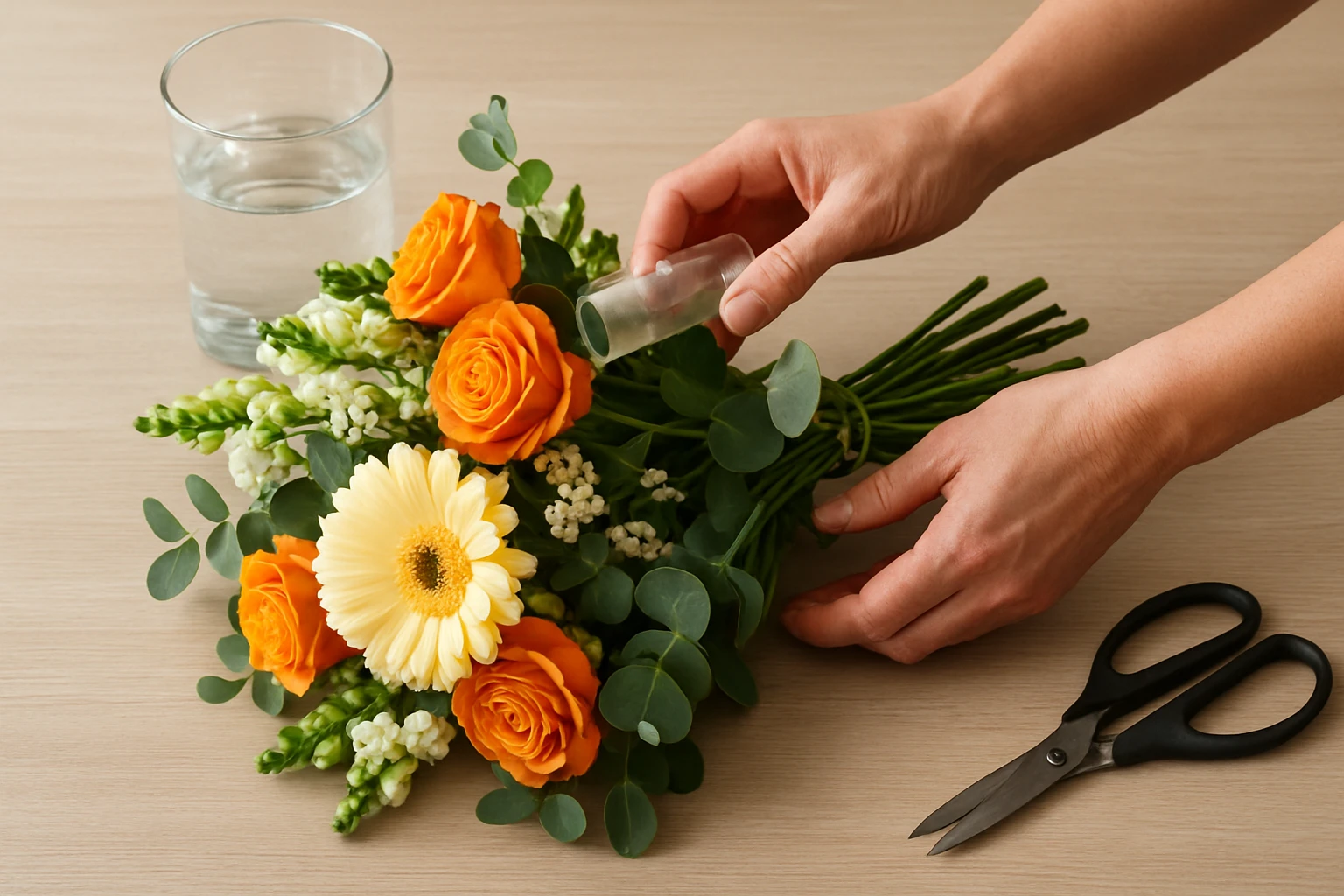
Freshly recut stems absorb water better than stems that have dried at the ends. Recut first, then get the flowers into water right away. Don’t trim everything, answer a call, and come back later. I’ve seen that exact pause flatten a bouquet on a 33-degree afternoon in Osborne Park.
If you’re handling several bunches, do them one at a time. Water on standby. Clean surface. No wandering off.
If the bouquet comes with a care packet, use it exactly as directed. Don’t guess. Don’t double it because “more might help.” The packet is there to support cleaner water and better hydration when mixed properly.
If you don’t have a packet, plain clean water still beats random kitchen experiments. I know the internet loves a hack. The bouquet usually does not.
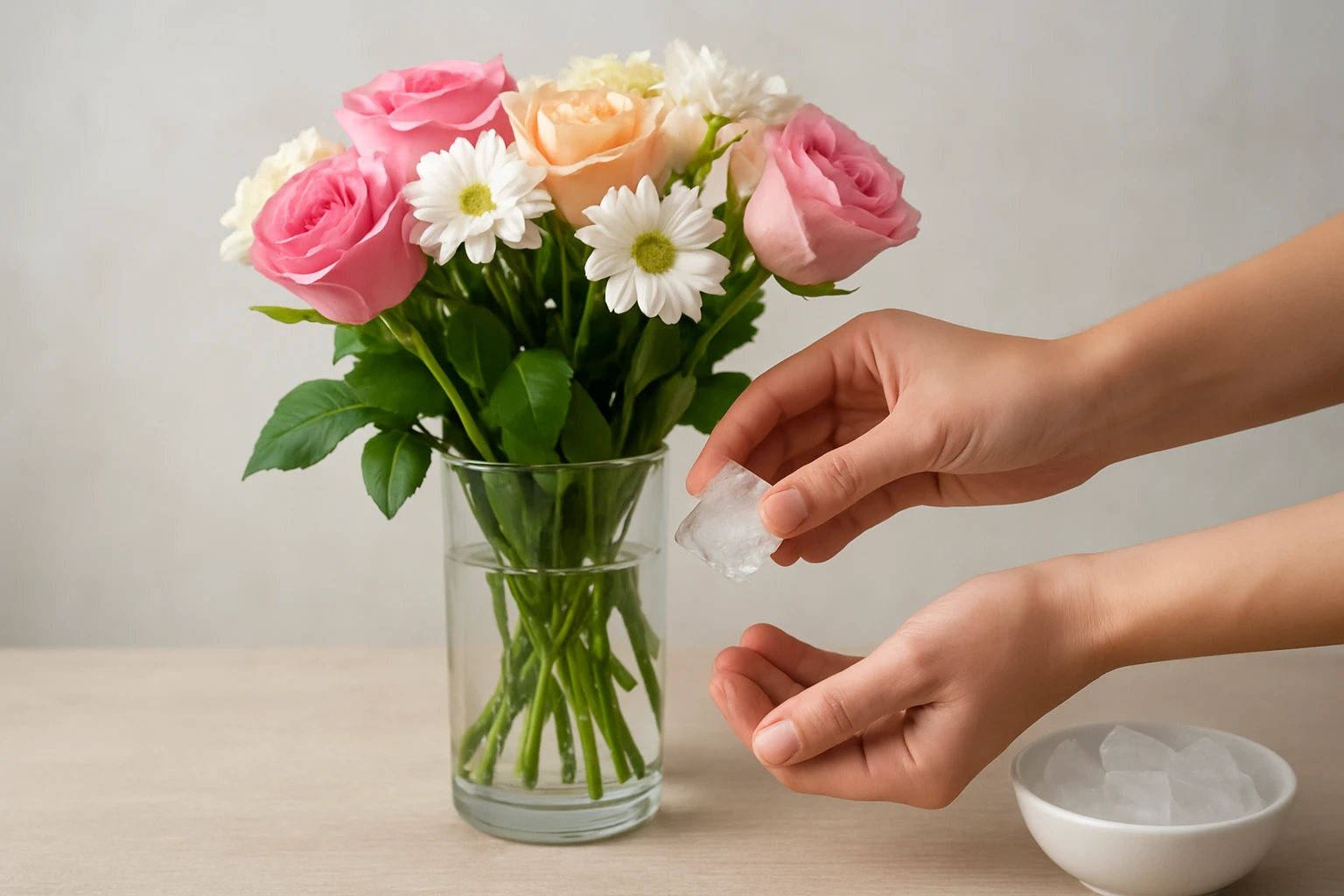
Once the flowers are in water, protect them from the stuff that ages them faster. Direct sunlight, heater blasts, air-conditioning vents, and warm rooms all cut vase life. Fruit can release ethylene gas, which can speed up flower aging too. So yes, that pretty bowl of bananas on the island bench is a real issue.
At home, a shaded dining table usually beats a kitchen counter. At venues, a side table away from the entry doors beats the dramatic spot under the skylight. Pretty placement means nothing if the flowers fade by the speeches.
Treat a bouquet like a guest: cool, hydrated, and out of the airflow.
This is the five-minute scan people skip because the bouquet “looked fine yesterday.” That’s exactly why you do it. Catch small stress early and you avoid the sad surprise when the arrangement suddenly looks tired on camera.
Some bouquets drink faster than you expect, especially in dry indoor air. Lift the vase. Look through the glass. Cloudy water can signal bacterial buildup, and low water leaves stems working harder than they should.
Topping up water regularly helps keep stems hydrated between full changes. That small habit matters a lot on day two and day three.
Use your eyes first, then your hands lightly. Drooping blooms, limp stems, and petals that feel soft rather than springy are common signs of dehydration or stress. Roses with bent necks, hydrangeas with floppy heads, and tulips leaning far harder than usual all deserve attention.
Be gentle. Handling petals too much can leave marks, especially on lighter blooms used for weddings and memorial work.
Don’t wait for total collapse. If the bouquet starts to look tired, refresh the water, give the stems a new angled trim, and move the arrangement back into a cooler spot. Multi-day bouquets often recover surprisingly well when you intervene early.
| What You See | Likely Problem | What To Do Next |
|---|---|---|
| Cloudy water | Bacterial buildup | Change the water and rinse the vase. |
| Drooping heads | Dehydration or blocked stems | Recut stems and return them to fresh water. |
| Soft petals | Heat stress or age | Move to a cooler shaded spot and monitor closely. |
| Bent stems | Poor water uptake or handling stress | Trim again and reduce exposure to heat and drafts. |
My own rhythm is simple: one check in the morning, one check before guests, photos, or evening handoff. Two fast inspections beat one desperate rescue every single time.
If the water looks off, assume the flowers are under stress.
Here’s the frustrating part: most bouquet problems don’t come from one terrible flower. They come from ordinary habits that seem harmless until they stack up. Fix these and you’ll save yourself a lot of disappointment.
When stems are packed too tightly, they bruise each other, tangle at the base, and reduce airflow around the bouquet. The arrangement may look lush for an hour, then start feeling heavy and tired.
I’ve split one giant bunch into two smaller vases for Mount Lawley dinner tables more times than I can count. It almost always looks better and lasts longer.
This one sneaks back in after arranging. You remove the obvious leaves, settle the bouquet, and suddenly a few lower sprigs are sitting below the waterline again.
That hidden greenery might seem minor, but it can turn clear water murky much faster than you’d like.
Day-two and day-three bouquets need a little reset. Skipping stem recuts can make it harder for flowers to keep drawing water, especially after long display hours. And while you’re at it, stop overhandling the petals. Every extra squeeze, spin, and sniff session shows up later.
If you’re sending arrangements home after a birthday lunch or a memorial gathering, basic instructions matter. “Keep cool, change water, trim tomorrow” is enough to save a lovely bunch.
Most bouquet failures come from one missed habit, not one bad flower.
The final stretch is where good work either holds or unravels. Weddings, funerals, celebrations, and gifts all have transition points — setup to display, display to photos, photos to transport. Plan those handoffs instead of winging them.
If the flowers are not actively being displayed, put them somewhere cooler. Between ceremony and reception. Between viewing and service. Between styling and photography. Cool storage helps flowers hold up better between display periods, and even twenty quiet minutes in shade can help.
For Perth events, shaded transport and protected placement matter a lot in warm weather. A calm back room beats a glamorous but hot foyer every time.
Right before the moment that counts, top up or refresh the water. It’s a tiny task with a very visible payoff. Nobody notices a fresh water jug behind the scenes. Everybody notices a drooping arrangement in close-up photos.
I once watched a bridesmaid rescue a head-table arrangement in under three minutes with fresh water and a cloth. Small move. Huge difference.
A clear care handoff helps the next person keep the bouquet fresh. If the flowers are moving from florist to planner, planner to family, or venue to home, say the basics out loud. Don’t assume everyone knows flower care because the blooms look sturdy.
That matters just as much for a heartfelt gift in Victoria Park as it does for reception flowers heading home after a Cottesloe wedding. The handoff is part of the care.
The last 10 minutes before display can matter as much as the first 10 after delivery.
Fresh bouquets last longer when you win the first hour, not when you panic on day three.
Prep the container, recut the stems, place arrangements carefully, inspect the water daily, and fix small issues early. That’s keeping flower bouquets fresh without guesswork.
Next time flowers arrive at your home or venue, which one of these steps will you make non-negotiable?
Explore Personalised Flower Boxes for Perth weddings, farewells, celebrations, and heartfelt gifts — curated with fresh or preserved stems and easy pickup or delivery.
Design Your Box0 comments

