




Best 9 Fresh Flower Bouquets Near Me in 2026
Discover expert insights on Best 9 Fresh Flower Bouquets Near Me in 2026 packed with data-backed advice curated by The Flower Boutique.

It’s 4:15 on a warm Perth afternoon, and you’re at the kitchen bench with a fresh bouquet, a pair of scissors, and just enough time before the first guests arrive. The paper crackles. A few leaves fall onto the counter. You can already feel the heat coming off the window near the dining table.
If you’ve ever wondered how to keep flower bouquets fresh without turning it into a full-time job, you’re not alone. I’ve watched beautiful flowers go from bright and perky to tired and thirsty in a single evening simply because they stayed wrapped too long or landed beside a sunny west-facing window. The good news? Fresh bouquets usually last longer from a handful of small, repeatable habits — not from fancy tricks.
Whether you’re styling a birthday bunch in Mount Lawley, setting sympathy flowers in Subiaco, or getting reception arrangements ready before a wedding in Fremantle, the routine is much the same. Prep first. Recut properly. Keep everything clean and cool. Then give the bouquet a quick daily reset. That’s the whole rhythm, and once you do it once or twice, it becomes second nature.
To help you better understand how to keep flower bouquets fresh, we've included this informative video from Floral Supplies. It provides valuable insights and visual demonstrations that complement the written content.
Start before the doorbell rings. You want a clean vase, sharp scissors or secateurs, fresh tap water, and the flower food packet if one came with the order. I still keep an old pair of Felco secateurs near the sink because blunt kitchen scissors can pinch stems instead of cutting them cleanly.
Clean vases and fresh water matter more than people think. Once bacteria gets going, stems struggle to drink properly, and the whole bouquet can fade faster than it should. If you’re rushing, at least give the vase a hot soapy wash and a thorough rinse.
| Item | Why You Need It | Quick Tip |
|---|---|---|
| Clean vase | Helps reduce bacterial buildup | Wash with hot soapy water, then rinse well |
| Sharp scissors or secateurs | Makes a clean cut for better water uptake | Avoid dull blades that crush stems |
| Fresh water | Keeps stems hydrated from the start | Replace cloudy water quickly |
| Flower food | Supports hydration and vase life | Use the sachet exactly as directed |
Before you even unwrap the bouquet, choose where it’s going to rest. Cut flowers generally last longer in a cool place away from direct sunlight and heat sources. That means no bright windowsill, no spot beside the oven, and no perch under the air-con vent that blasts dry air every ten minutes.
Also — and this catches people out all the time — keep flowers away from ripening fruit. If there’s a fruit bowl full of bananas and avocados on the island bench, move one or the other. You’ll get better vase life from a shaded sideboard or dining table in the coolest room you’ve got.
Give yourself a proper little setup. Clear a bit of bench space, keep the sink nearby, and have a bin or compost bowl ready for leaves, ties, and stem ends. It makes the whole job faster, cleaner, and far less chaotic.
If you’re handling wedding pieces or multiple gift bouquets at once, that clean staging area helps even more. You don’t want petals getting crushed under wrapping paper while you hunt for scissors.
Rule of thumb: if the vase smells stale or looks cloudy before you start, wash it again.
Once the bouquet arrives, unwrap it as soon as you reasonably can. Don’t leave it bundled on the bench while you answer emails or finish setting the table. That first hour really does matter, especially on a warm Perth day.
Work gently. Slide off the paper, plastic, ribbon, and any tight elastic without yanking. Roses, lisianthus, chrysanthemums, and soft filler flowers can bruise more easily than they look. If the bouquet is tightly netted for transport, loosen it bit by bit rather than pulling it free in one go.
Now give the bouquet a quick inspection. You’re looking for obvious transport stress: bent necks, crushed stem ends, mushy sections, browning leaves, or any petals that have taken a hit in the car. Damaged stems can reduce water uptake, so even a lovely bouquet may struggle if those bits aren’t dealt with early.
You don’t need to panic over one marked petal. We’ve all seen that on a long drive from Joondalup or Rockingham. Just remove anything badly damaged and focus on keeping the healthy stems drinking well.
Mixed bouquets aren’t always one-size-fits-all. Some flowers have thick, sturdy stems and can happily sit in a fuller vase, while softer or more delicate blooms may do better with a slightly different water level. If you notice one or two fussier stems, separate them mentally before arranging so you can place them with a bit more care.
This comes up a lot with event flowers. A bouquet may include hardy focal blooms plus daintier accents, and they won’t all respond the same way to heat, crowding, or deep water.
Don’t leave the bouquet wrapped longer than necessary; the first hour matters.
This is the step people skip most often, and it’s one of the biggest improvements you can make. Even if the bouquet was professionally prepared earlier in the day, stems can dry slightly during transport. A fresh cut opens them back up.
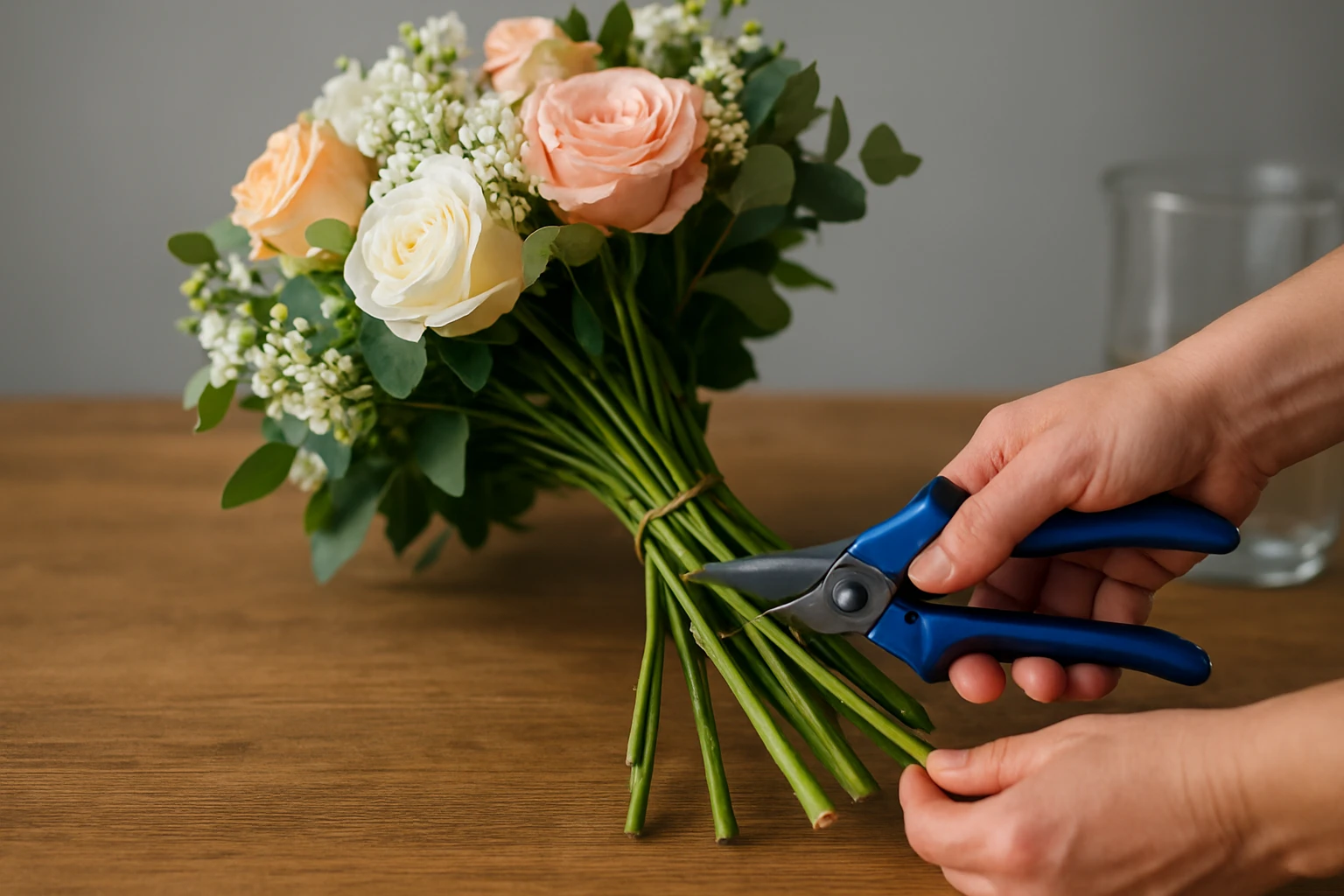
Trim a small amount off each stem — usually 1 to 2 centimetres is enough. Use something sharp. If the cut end looks squashed, you’re not helping the flower; you’re making its job harder.
Cutting at an angle is standard florist practice for a reason. It gives the stem more exposed surface area to take up water, and it helps stop the cut end from sitting flat against the bottom of the vase.
You don’t need a dramatic slant. Just a clean diagonal cut will do. Think practical, not theatrical.
Before the stems go into water, strip off any leaves that would sit below the waterline. Rose foliage, eucalyptus leaves, soft greenery — if it will be submerged, remove it. Leaves left in the vase start to decay, and that adds to bacterial buildup fast.
This one small cleanup step can buy you extra freshness with very little effort. Less debris in the water means cleaner drinking conditions for the stems that matter.
Practical rule: recut stems any time flowers have been out of water for a while.
A vase should support the bouquet, not squeeze it into submission. If the neck is too narrow, the stems get crowded and bruised. Too wide, and the arrangement slumps outward and loses shape. You want something that holds the stems upright with a bit of breathing room.
For a medium mixed bouquet, a clear cylinder or gently tapered vase usually does the job well. If you’re working with bigger reception flowers, it may be smarter to split the stems rather than jam everything into one vessel.
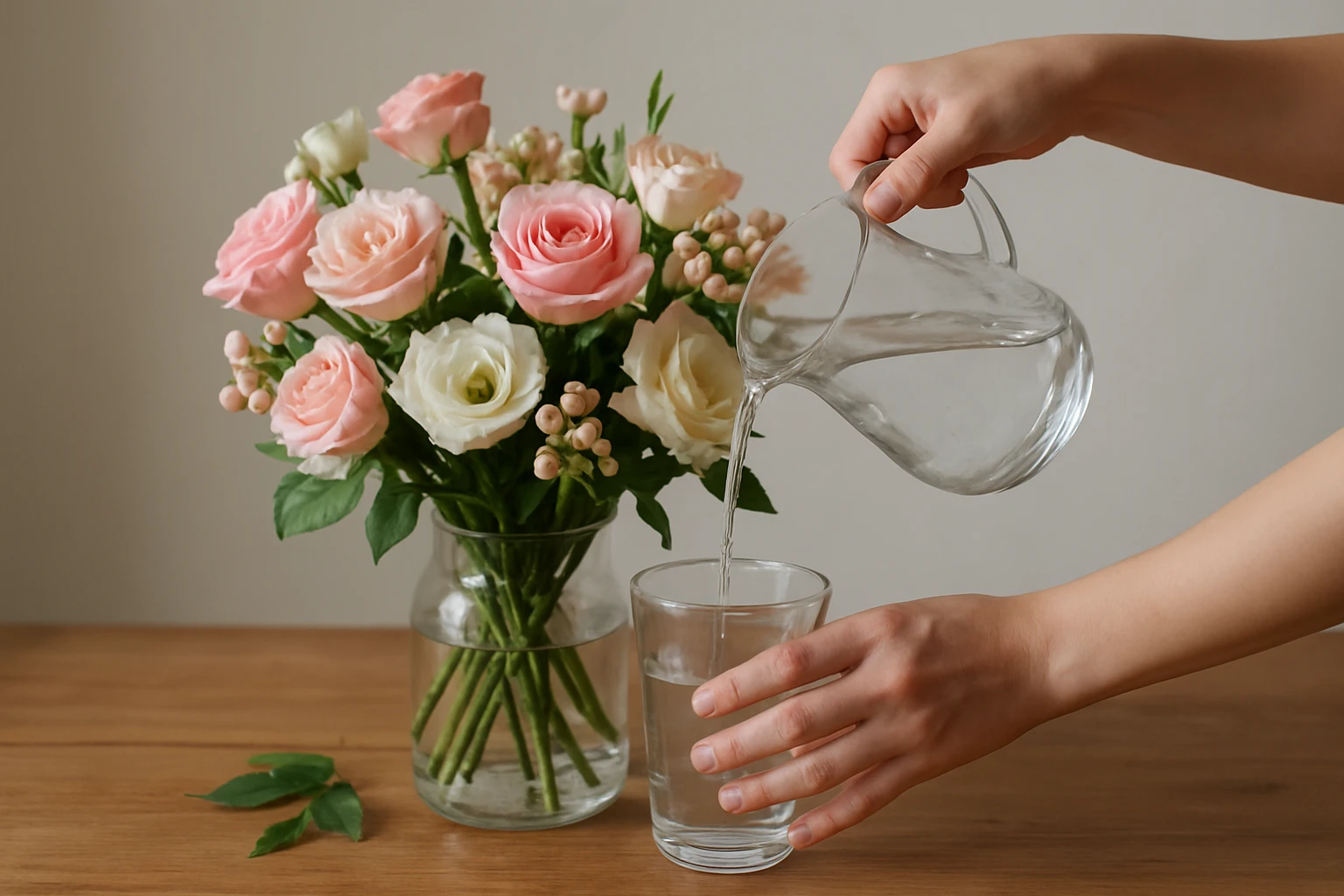
Fresh water is non-negotiable. Fill the vase so the lower stem ends are well covered, but don’t automatically drown every arrangement to the brim. Mixed bouquets can contain both thicker woody stems and softer stems, so it’s worth checking the balance rather than guessing.
As a general starting point, give the stems enough water to drink well while keeping leaves out of the vase. If one delicate bloom seems unhappy in deep water, you can always adjust the level after arranging.
If the bouquet came with flower food, use it. Most florists include it because it helps support hydration and vase life. Follow the packet directions rather than tipping in half and saving the rest for later.
Many Perth florists, including The Flower Boutique, add a sachet for exactly this reason. It’s not fluff. It’s part of the care routine.
If the bouquet is too crowded in the vase, split it into two smaller vessels rather than forcing the stems together.
Placement can matter just as much as trimming. I’ve seen a bouquet look perfect at 2 pm and tired by dinner because it sat beside a bright window all afternoon. In Perth, that late-day sun can be brutal, especially through glass.
Keep the arrangement away from sunny sills, kettles, dishwashers, ovens, and lamps that throw off heat. Even a side table near a warm sliding door can shorten display life faster than you’d expect.
Fruit bowls and flowers are lovely in photos. In real life, they’re not ideal roommates. Ripening fruit gives off gas that can speed up ageing in cut flowers, so it’s worth separating the two.
If your bouquet is on the kitchen island beside nectarines from the Subi Farmers Market, move it. A hallway console, shaded dining nook, or cool office desk is usually a better bet.
For events, this step starts before the flowers even hit the table. Decide where the bouquet or centrepiece will sit before it arrives. That saves you from leaving arrangements in a hot car, a sunny foyer, or a reception room that isn’t ready yet.
During transport, use the coolest practical spot in the car and keep the air moving. During display, choose shade over spectacle. Your flowers won’t care how pretty the sunny window is.
| Stress Point | What Happens | Better Choice |
|---|---|---|
| Sunny window | Heat and direct light speed up wilting | Shaded side table or cool dining corner |
| Near kettle or oven | Warm air dries flowers out faster | Bench away from appliances |
| Beside fruit bowl | Ripening fruit can shorten display life | Separate room or opposite side of the space |
| Hot car during setup | Travel stress weakens stems before display | Cool car interior and quick transfer indoors |
For events, decide the display spot before the flowers arrive.
Once the bouquet is arranged, daily care is simple. Check the water every day. Some flowers drink surprisingly fast, especially in warmer weather, so a vase that looked full on Monday morning can be running low by Tuesday afternoon.
For most bouquets, topping up daily and replacing the water regularly keeps things on track. If it’s a hot week in Perth or the arrangement is in a busy event space, check it more often.
Cloudy water is your warning sign. It usually means bacteria and plant debris are building up, and the stems won’t thank you for leaving them in it. Tip the water out, rinse the vase, give it a quick wash if needed, and refill with fresh water.
This doesn’t need to become a half-hour project. Most of the time it’s a two-minute reset at the sink.
Take off spent petals, yellowing leaves, and any bloom that has clearly passed its best. This won’t magically make the remaining flowers younger, but it does help the whole arrangement look fresher for longer.
For celebration tables, sympathy arrangements, or a gift bouquet in the front room, that visual tidy-up makes a real difference. A bouquet can still look lovely even after one or two stems retire early.
Small daily care beats one big rescue job later.
If the bouquet starts drooping, don’t assume it’s finished. Often, the first fix is a fresh trim. Recut the stems, remove any slimy or decaying foliage, and clear off damaged petals while you’re there.
Slimy leaves are a clue that the water environment has gone downhill. Once you clean that up, the healthier stems often respond better than you’d think.
Next, empty the vase completely and wash it properly. Don’t just top up murky water and hope for the best. A clean vessel and fresh water can improve uptake when the flowers have been struggling.
I’ve brought more than one droopy lounge-room bouquet back this way after a long Saturday. Not every stem bounces back, but plenty do if you catch them early enough.
After the cleanup, move the bouquet to a cooler area and leave it alone for a while. A shaded spare room, cool hallway, or air-conditioned study is often better than the kitchen bench.
Cooling the bouquet down can slow wilting in many cut flowers. It’s a simple reset, and sometimes that’s all a tired arrangement needs.
If flowers are badly wilted, not every bloom will recover fully, so act early.
This is the classic one. You grab a vase from the cupboard, give it a quick splash, and call it good. Then submerged leaves start breaking down, the water clouds up, and the bouquet fades before its time.
If you remember nothing else, remember this: flowers do better in clean water, inside a clean vase, with no soggy foliage below the waterline. It sounds basic because it is basic — and it works.
Flowers can lose momentum in transit. Maybe the bouquet sat out of water while you drove from Cottesloe to the Swan Valley venue. Maybe it spent half an hour on the bench while you answered the door and sorted chairs. Recutting the stems gives them a fresh start.
Skipping that step is one of the easiest ways to shorten vase life, especially for bouquets being moved between pickup, ceremony, photos, and reception.
Heat gets blamed a lot, and fair enough, but drafts deserve a mention too. Constant air movement from heaters, vents, ceiling fans, or air-con can dry flowers out faster than you expect. Add direct sun, and you’ve got a rough setup for anything delicate.
Busy event rooms are especially tricky. Flowers may look fine at setup, then struggle once guests arrive, doors keep opening, and the room temperature climbs. That’s why placement matters so much from the start.
| Mistake | What It Causes | Quick Fix |
|---|---|---|
| Dirty vase | More bacteria and shorter vase life | Wash thoroughly before use |
| Leaves below waterline | Decay and cloudy water | Strip submerged foliage |
| No stem recut | Poor water uptake after transport | Trim 1 to 2 cm off each stem |
| Hot or sunny placement | Faster wilting and petal stress | Move to a cool shaded area |
If you remember only one thing: clean vase, fresh cut, cool spot.
Longer-lasting flowers come from a simple routine: prep, recut, hydrate, cool, and refresh.
If you were searching for how to keep flower bouquets fresh, that’s the whole playbook — and it works just as well for a heartfelt gift as it does for a wedding table or farewell arrangement. Which bouquet on your bench could use that two-minute reset today?
The Flower Boutique’s Personalised Flower Boxes bring Perth homes and event planners tailored floral pieces for weddings, funerals, celebrations, and meaningful gifting.
Shop Boxes0 comments

