




Best Personalised Flower Boxes for 2026
Discover expert insights on Best Personalised Flower Boxes for 2026 with step-by-step tips and examples from The Flower Boutique.

On a warm Perth afternoon, a bride moves past stone steps with loose ivory-and-burgundy stems in her hands while a planner lines up matching pieces on the reception tables. The sun is bright. The limestone is bouncing light everywhere. And suddenly every texture matters — not just the colour, but how those stems read from ten metres away and in a phone camera at arm’s length.
If you’re planning a dried flower arrangements wedding in Perth, that scene probably feels familiar already. You want something beautiful, yes, but also something practical. Maybe your ceremony is in Fremantle, your dinner is in Swan Valley, and you’d quite like the flowers to survive the whole day without drama. Fair ask.
I’ve worked enough weddings to know that dried florals look easiest when they’ve actually been thought through. Not overthought. Just chosen with intention. So below, I’m walking you through the colour-led and function-led directions that make the most sense for 2026 — especially if you need the flowers to do more than sit pretty for twenty minutes.
Before you fall for one bouquet on Pinterest and a completely different one on a shop page, set a few rules. It saves money, trims decision fatigue, and stops you from ordering something gorgeous that clashes with the room.
Here’s the first thing I’d tell a couple over coffee in Leederville: stop starting with stem names. Start with the palette. Many dried-flower shopping pages are organized by colour families first, because that’s how most people shop for weddings.
That tells you a lot. Shops know most people buy dried wedding flowers by colour feeling first. Also, labels vary. One page says burgundy, another says red. One says purple, another says purple & mauve. Don’t get stuck on taxonomy when what you really mean is “moody wine tones” or “soft dusty pinks.”
Lead with palette first: most dried-flower shopping pages are organized by color before anything else.
Dried work lives or dies on texture. A bouquet can be technically well made and still look messy in photos if every element is spiky, fluffy, and fighting for attention. I like to think in three parts: one main shape, one softer filler, one airy edge. That’s how you get movement without visual noise.
This matters even more in Perth light. Midday sun outside a venue in Cottesloe or on a white terrace will flatten subtle colour, so texture becomes the thing your eye reads first. If the dress has lace, the venue has exposed stone, and the tables have ribbed glass, you may need a calmer bouquet than you think.
This is where dried flowers become genuinely useful. Some florists design dried flowers with gifting, keepsakes, and décor in mind, which tells you these pieces aren’t only for one-day use. They can cross into remembrance and styling after the ceremony too.
If your bouquet needs to become a keepsake, a gift for a parent, or table décor after the ceremony, that should shape the design from day one. I’ve seen couples spend less overall by choosing one flexible style instead of three unrelated floral moments.
| Start Here | Ask Yourself | Best Use |
|---|---|---|
| Color family | Do you want quiet, romantic, bold, or cool-toned? | Shortlisting bouquets fast |
| Texture level | Will the venue and dress already bring lots of detail? | Making photos feel balanced |
| Second life | Should the flowers become décor, keepsakes, or gifts later? | Stretching value beyond the ceremony |
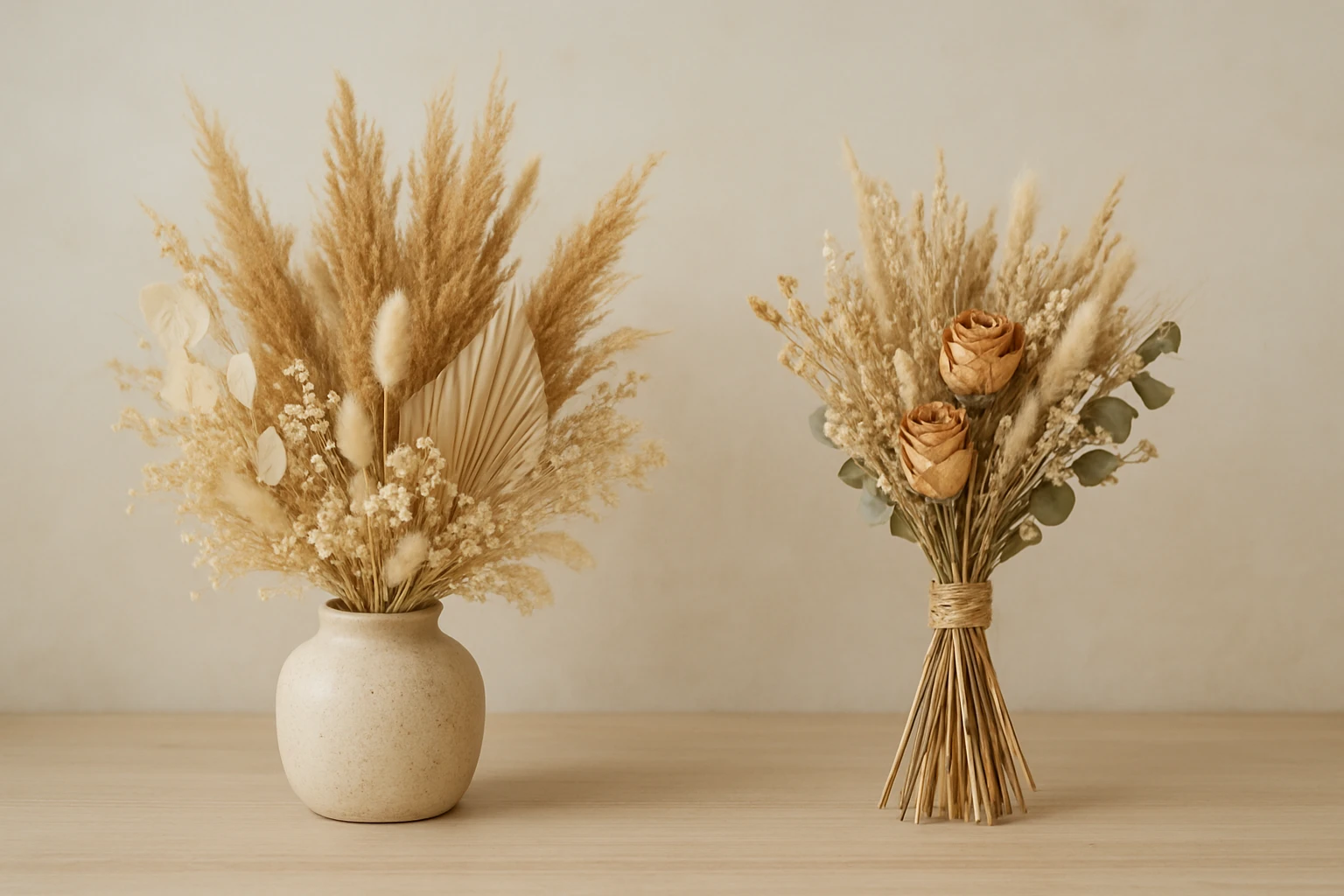
This is the safest 2026 direction, and I mean that as a compliment. Neutrals look calm, expensive, and easy to place almost anywhere.
Best for: heritage venues, modern city spaces, mixed bridesmaid colours, and couples who want the flowers to support the room rather than dominate it.
White and ivory-white tones stay popular for a reason. Ivory reads clean without feeling stark. In a strapless satin dress, it looks modern. In a long-sleeve lace gown, it still makes sense. That flexibility is gold.
I especially like ivory for ceremonies where the architecture is already doing heavy lifting — old stone chapels, timber-beam barns, or sleek hotel foyers in the CBD. You don’t need the bouquet to shout when the surroundings already have character.
The tan & brown side of the trend points to the earthy side of the trend. Think warm oat, camel, biscuit, and sand rather than “brown” in the heavy sense. In Swan Valley venues with timber tables and warm evening light, those tones feel right at home.
Tan-heavy bouquets also pair beautifully with linen suits, champagne bridesmaid dresses, and matte ceramics. They photograph especially well when the styling is textural rather than glossy.
If the venue already has strong textures, let the bouquet stay quiet.
Pick neutrals when you’re mixing dress tones, using a visually busy venue, or trying to keep the whole day timeless. They’re also the easiest option if you want the bouquet to move from ceremony to reception without suddenly feeling “too much” on the table.
And yes, neutral does not mean bland. Done properly, it feels edited. That’s different.
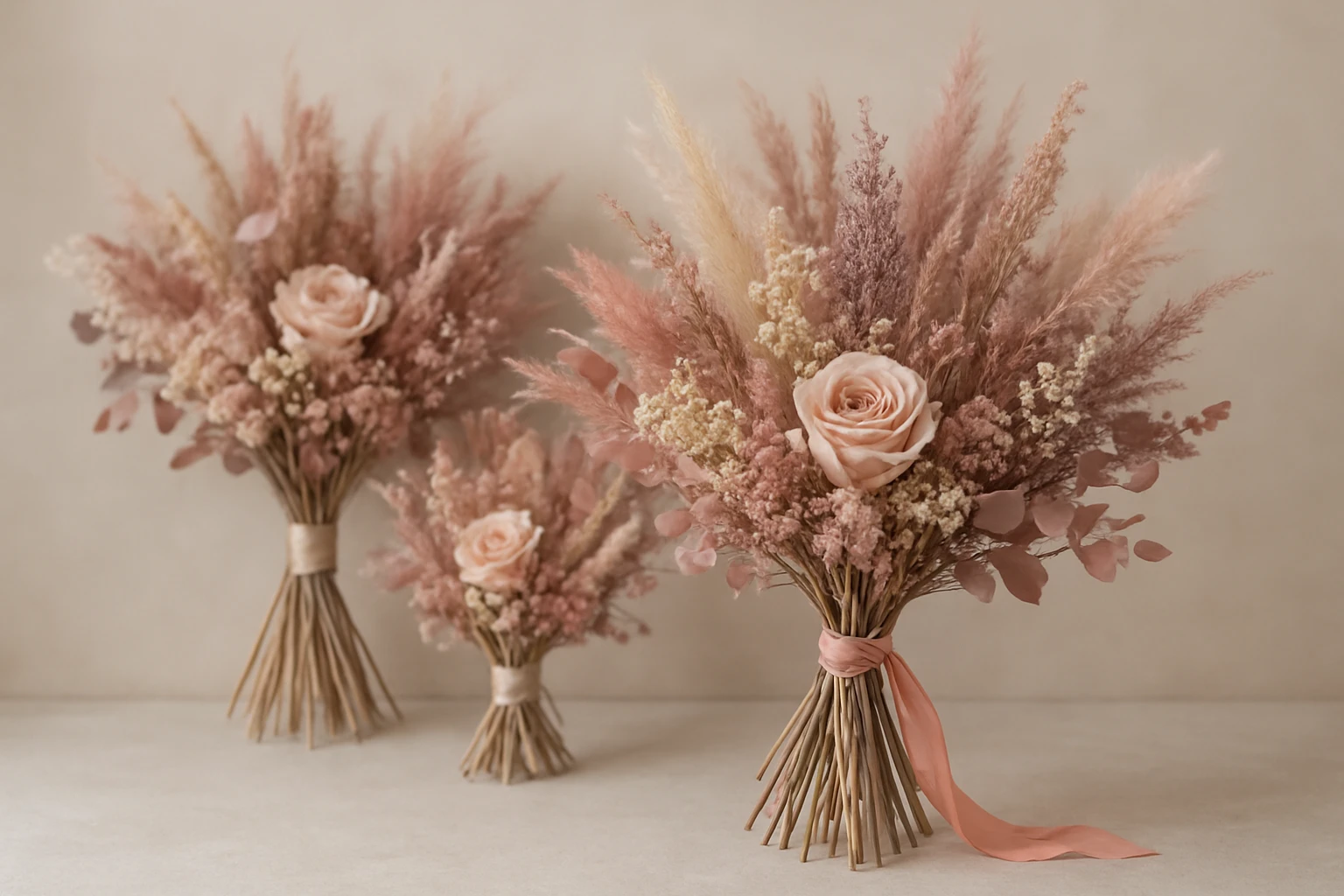
If neutrals are the safest choice, pink family palettes are the softest. They take the natural dryness and structure of preserved stems and make it feel more tender.
Best for: garden ceremonies, intimate receptions, spring weddings, and couples who want warmth without going full statement colour.
Pink remains a core wedding bouquet colour family, and that tracks with what couples still ask for most often. Blush keeps things romantic without tipping into sugary. It sits nicely with cream dresses, rose-toned makeup, and soft green backdrops.
There’s also clear inspiration demand behind this look. A Pinterest collection titled “Discover 51 Wedding Bouquets - Dried Flowers Forever and wedding bouquets ideas in 2026” shows people are still actively saving dried bouquet ideas in this lane. Search interest matters because it shapes what couples arrive wanting to recreate.
Mauve is what keeps a blush bouquet from looking one-note. It adds shadow. It gives the arrangement a grown-up edge.
When I’m building a pink palette mentally, I usually want three steps: cream, blush, and something duskier. Mauve does that job beautifully, especially for late-afternoon ceremonies where the light gets warmer by the minute.
Pink looks freshest when it is broken up with a few cream stems.
The fix is contrast — but quiet contrast. A little cream. A little shape variation. Maybe one or two stronger mauve notes, not a whole second bouquet hiding inside the first. Pastels need relief.
If your venue is already green and lush, like a garden setting in South Perth, a soft pink bouquet can look dreamy. If the backdrop is pale stone or white walls, make sure the bouquet has enough depth to hold its outline in photos.
This is where dried flowers stop being delicate background décor and become the focal point. Richer tones feel dramatic, a bit cinematic, and very at home in evening celebrations.
Best for: autumn weddings, candlelit receptions, black-tie styling, and couples who want one visual anchor that pulls the whole palette together.
Burgundy and red-toned florals both work well in this category. Same family, slightly different naming. Either way, the effect is similar: depth, warmth, and immediate contrast against light dresses.
Burgundy works especially well when everything else is restrained. A simple gown. Clean tables. Brass candleholders. Then the bouquet arrives and does the emotional heavy lifting. I’ve seen this look sing in warehouse spaces around Fremantle where the room wants mood, not fuss.
Orange and yellow tones, along with orange & peach combinations, form the sunset branch of the trend — terracotta, apricot, amber, faded marigold. It feels less formal than burgundy and a bit more playful.
Late-afternoon outdoor weddings are where these tones really earn their keep. It’s common knowledge that saturated warm colours read beautifully in golden hour and candlelight. They don’t disappear when the light turns softer.
Use one strong dark anchor color and let the rest of the bouquet breathe.
Limit the number of dark notes. That’s the trick. One anchor tone — burgundy, rust, or deep wine — paired with lighter companions gives you drama without visual mud.
If every stem is dense and intense, the bouquet can start looking blocky. A bit of air solves that. Deep colour needs negative space the way a good speech needs pauses.
These are cooler, cleaner, and slightly less expected — which is exactly why they stand out in 2026. When everyone else is choosing beige or blush, blue and green feel intentional.
Best for: coastal ceremonies, contemporary venues, daylight-heavy receptions, and couples who want a botanical rather than overtly romantic look.
Blue in dried florals can be beautiful when it’s dusty, muted, or greyed off a little. It feels crisp, not sugary. It pairs well with silvery fabrics, pale stone, and modern tailoring.
I’d look at this first for a coastal ceremony where the surroundings are already airy. The bouquet doesn’t need to fight the backdrop. It just needs to sit neatly inside it.
Green is often the most underrated colour family in dried work. It reads grounded and fresh at the same time. In garden or glasshouse settings, it can feel more integrated with the space than a heavy floral colour story.
Because both major shop examples group green as its own category, you can tell buyers are actively searching for it, not just accepting it as filler. That’s a meaningful shift.
Add one warm neutral stem so the bouquet does not go flat in photos.
Mix in a touch of warmth. Not enough to change the palette — just enough to keep it human. A little oatmeal, parchment, or soft sand tone can stop blue-and-green arrangements from looking severe.
Common knowledge says cool palettes usually photograph clearly in daylight and pair well with lighter backdrops, and that’s exactly why they work in bright Western Australian conditions. Just don’t make them so cool that they lose warmth entirely.
This is one of the smartest ways to spend on wedding florals right now. Instead of treating every piece as separate, couples are buying coordinated sets that can move through the whole day.
Best for: practical planners, tighter budgets, destination-style schedules, and anyone who wants one visual language from prep photos to the last toast.
Smaller companion pieces alongside bouquets make perfect sense. These pieces should talk to each other. Not match like school uniforms — just belong to the same family.
When the bouquet and buttonhole share the same colour logic, photos look immediately more expensive. You notice it in close-ups. You notice it in group shots. You definitely notice it when nothing feels random.
Smaller accessories and wedding décor can help create a coordinated look, while keeping the design practical across different parts of the day. That tells you coordination is not a niche extra. It’s a standard shopping pattern.
Mini bouquets are another clue. Smaller pieces and companion items are part of the dried-flower market because people want repeatable, scalable elements — not just one hero bouquet and a scramble afterward.
If the flowers must do double duty, keep the bouquet and ceremony pieces in the same stem family.
Choose one dominant palette and one dominant texture, then repeat them in different sizes. I’ve moved dried aisle clusters onto cocktail tables after the ceremony in South Perth and, honestly, guests assumed that was the plan all along. That’s what good coordination does.
Think modularly. The bridal bouquet is the hero. Boutonnières are the shorthand. Hair pieces and small table accents are the echo. Once you see it that way, the whole order becomes easier.
This might be the most emotionally useful category of all. Dried and preserved flowers shine when the story doesn’t end after the wedding day.
Best for: couples who want a lasting memento, planners sourcing thank-you gifts, and families who value flowers as memory pieces rather than disposable décor.
People aren’t only shopping for ceremony flowers; they’re shopping for what comes after. Keepsake culture is built into the category.
If you know you want to display the bouquet at home, say that early. A keepsake-friendly arrangement usually benefits from cleaner shape, stronger structure, and a palette you’ll still want in your lounge room six months later.
Dried flowers also work well as repeatable gifts as well as event pieces. The crossover matters. Wedding flowers don’t live in a bubble. A piece can become a thank-you gift, a remembrance object, or a quiet decorative item long after the reception chairs are packed away.
The best dried arrangement is one the couple can keep, gift, or repurpose after the wedding day.
Choose long-life pieces when sentiment matters as much as spectacle. Parent gifts. Bridal party keepsakes. A small arrangement for the signing table that later moves into a home office. These are the moments where dried flowers make more sense than something fleeting.
In Perth, this is also where a florist like The Flower Boutique can be genuinely useful: you can ask for the wedding palette to carry into a personalised box or preserved piece, rather than starting from scratch later.
Here’s the practical part. Match the arrangement to the venue, budget, and timeline first. Then decide whether you need one standout bouquet or a coordinated package.
Start with the photo you want on the day. Seriously. Imagine the dress, the backdrop, the light, and the table styling in one frame. That mental image will tell you more than any stem list.
Start with the photo you want, then work backward to the flowers.
If the dress is detailed, go simpler on texture. If the venue is minimal, the bouquet can work harder. If the room is already warm-toned — timber, brick, candlelight — don’t force icy blue just because it looked chic in one saved image.
Not everyone needs the full suite. Some couples want one hero bouquet and a couple of buttonholes. Others need ceremony pieces, table details, gifts, and take-home keepsakes. The right answer depends on how many jobs the flowers need to do.
| Your Situation | Smarter Pick | Why |
|---|---|---|
| Simple ceremony, strong venue styling | Standalone hero bouquet | Keeps the spend focused where it will be photographed most |
| Multiple floral touchpoints across the day | Coordinated package | Creates consistency from prep to reception |
| Gifts or keepsakes matter after the wedding | Long-life preserved add-ons | Extends value and sentiment beyond one event |
If budget is the pressure point, use real market signals. Some dried-flower shops advertise free shipping over a set order value. Others highlight mini bouquets at accessible price points. Those details remind you the category spans from small accent pieces to full event packages.
Dried flowers are forgiving, but wedding logistics are not. Some florists make a point of offering easy online ordering or phone ordering and clearly naming their service area. That’s a useful reminder to ask practical questions early: who is delivering, what arrives boxed, and what needs styling on site?
For Perth weddings, I’d lock in the broad palette and format early, then finalise smaller coordinating pieces once outfits and tables are confirmed. And if you want a bouquet that later turns into a keepsake or gift, ask that question upfront instead of as a last-minute add-on.
A beautiful dried flower arrangements wedding gets much easier when you choose by palette, texture, and purpose instead of getting lost in individual stem names.
Neutrals calm a busy room, pinks soften texture, deeper shades bring drama, cool botanicals freshen daylight, and coordinated or keepsake pieces stretch your spend after the vows. Which of these seven directions feels most like your day in Perth?
Personalised Flower Boxes, bespoke fresh or dried designs, and event support help Perth clients mark weddings, farewells, celebrations, and gifting with elegance and ease.
Plan Your Florals0 comments

